
Search
Dichroic glass changes color because its thin optical coating reflects selected wavelengths of light while transmitting others. When the direction, color, or intensity of the light changes—or when the viewer moves to a different angle—the balance between reflected and transmitted wavelengths also changes. As a result, the same glass panel can appear to shift between noticeably different colors without pigments, printing, or electronic controls.
This behavior makes dichroic glass particularly valuable in architecture, retail interiors, feature walls, installations, and decorative glazing, where designers want a surface's appearance to respond dynamically to its environment.
The color-changing effect does not come from ordinary colored glass. Dichroic glass uses multiple ultra-thin optical coating layers, commonly based on metallic oxides. These layers create optical interference: some wavelengths are reflected toward the viewer, while others continue through the glass.
Because reflected and transmitted light differ, a panel may appear one dominant color when viewed from the reflective side and another when viewed through the glass.
This is also why professional dichroic glass wholesale suppliers should evaluate more than a buyer's preferred color. The lighting environment, panel orientation, viewing direction, background materials, and final installation position can all affect the result.
Viewing angle is one of the most important variables in the final appearance of dichroic glass.
When a viewer stands directly in front of a panel, the reflected wavelengths reach the eye at one optical relationship. As the viewer moves sideways, upward, or downward, the interaction between the coating and the incoming light changes.
This can make the visible color gradually shift rather than simply switching from one fixed color to another.
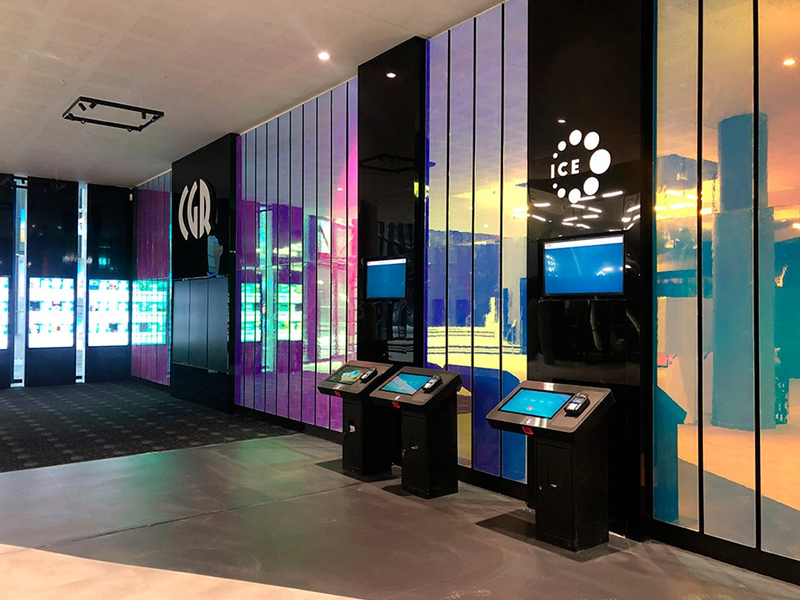
For example, a person walking past a dichroic glass partition may see the panel transition through several hues. Someone standing behind that same partition may experience a different transmitted color at the same moment.
Evergreen specifically identifies angle of view and the angle and color of the light source as factors behind the color-shifting effect of dichroic glass.
For designers, this means a dichroic sample should ideally be examined from several positions rather than evaluated straight-on only.
Natural daylight is constantly changing, which makes dichroic glass particularly expressive near windows, atriums, facades, and other daylight-rich spaces.
Morning sunlight may enter a building from a relatively low angle, while midday light approaches from a different direction. Cloud cover, building orientation, nearby structures, and seasonal sun paths can further change how much light reaches the glass.
The coating itself does not need to physically change for the visible effect to vary. Instead, the changing illumination alters what is reflected toward the viewer and what passes through the panel.
This is one reason dichroic glass can work effectively in architectural facades and public installations: the visual experience can evolve as sunlight and observer position change throughout the day.
Artificial lighting gives designers more control over the appearance of dichroic glass because the position, direction, and color temperature of the light source can be planned.
Directional spotlights can emphasize strong reflected colors, while backlighting may make transmitted colors more noticeable. Multiple light sources can create layered effects depending on where the viewer stands.
A useful design approach is to consider the lighting system and dichroic glass as one composition rather than treating the glass as an isolated material.
| Lighting / Viewing Condition | Typical Visual Behavior | Design Consideration |
|---|---|---|
| Front lighting | Reflected colors become more noticeable | Useful for feature surfaces and displays |
| Backlighting | Transmitted colors become more prominent | Suitable for partitions and illuminated installations |
| Changing daylight | Appearance varies during the day | Consider building orientation and window position |
| Moving viewer | Color shifts with viewing position | Effective in corridors, lobbies, and retail environments |
| Multiple light sources | Layered reflections and color effects may appear | Test the sample under the intended lighting setup |
| Dark background | Reflected color may become visually stronger | Useful for dramatic interior compositions |
| Bright background | Transparency and transmitted color may become more noticeable | Suitable for open and light-filled spaces |
The table should be treated as a design guide rather than a fixed color specification because the final result depends on the selected coating and installation environment.
Yes. Background color and material can significantly influence how people perceive the dichroic effect.
Against a dark wall, reflected colors may appear more prominent because there is greater visual contrast. Against a bright background or open window, transparency and transmitted colors may become more important.
Reflective metal, stone, timber, painted walls, or another glass layer can each create a different visual relationship.
Designers should therefore review the glass together with surrounding finishes. Selecting a dichroic panel in isolation may produce a different result once it is installed in the completed space.
The main distinction is how the decorative effect is created.
Dichroic glass depends heavily on optical coatings, light, and viewing angle. By contrast, etched and carved glass change the physical appearance or texture of the glass surface more permanently.
If a project requires a consistent matte appearance or privacy effect regardless of viewing direction, an etched glass supplier may offer a more appropriate solution.
For deeper texture, relief, or three-dimensional decorative effects, carved glass provides a different design language because the visual result comes from physical surface treatment rather than primarily from changing light.
Dichroic glass is usually more appropriate when movement and changing illumination are intended to become part of the user experience.
The effect is especially useful in spaces where either the observer or the light source naturally moves.
Typical examples include:
Hotel and office lobbies
Retail storefronts
Shopping malls
Exhibition spaces
Museum installations
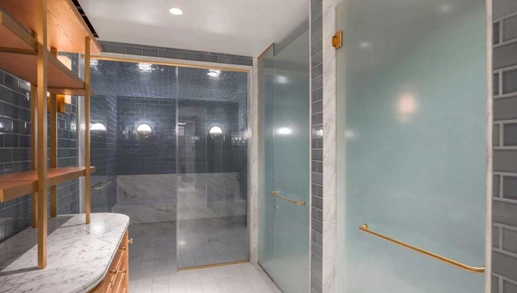
Interior partitions
Feature walls
Decorative ceilings
Architectural facades
Public art installations
Evergreen lists decorative facades, partitions, ceilings, retail displays, and dichroic glass wall installations among the architectural and interior applications for its custom panels.
Long corridors can be particularly effective because the viewing angle changes continuously as people walk past the glass. Retail displays can use the same principle to attract attention as customers move through the space.
A catalogue color should be treated as the beginning of the selection process rather than a guarantee of how the installed panel will appear.
Before finalizing a specification, designers should consider:
Primary viewing direction
Secondary viewing angles
Natural versus artificial light
Direction of incoming light
Background color and material
Whether the panel will be front-lit or backlit
Interior or exterior use
Expected movement of people around the glass
For larger architectural projects, physical sample testing under representative lighting conditions is particularly useful.
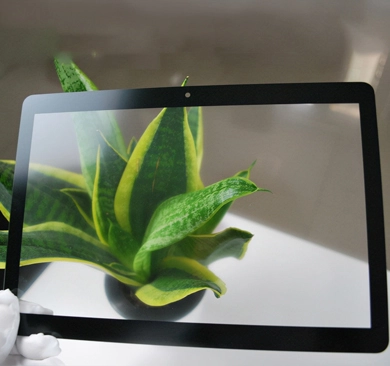
Evergreen states that dichroic glass colors vary depending on the composition and thickness of the metallic oxide coating layers, while customized sizes, shapes, coating options, and fabrication requirements are available for commercial projects.
When a project requires highly controlled logos, detailed graphics, or fine patterns, changing optical color alone may not provide enough graphic precision.
In these situations, designers can compare dichroic glass with laser engraved glass or use different decorative glass treatments in separate areas of the same project.
For example, a retail environment might use dichroic panels for dynamic feature walls while using engraved glass for permanent brand graphics. This approach allows each glass process to perform the function it handles best instead of forcing one material to achieve every visual objective.
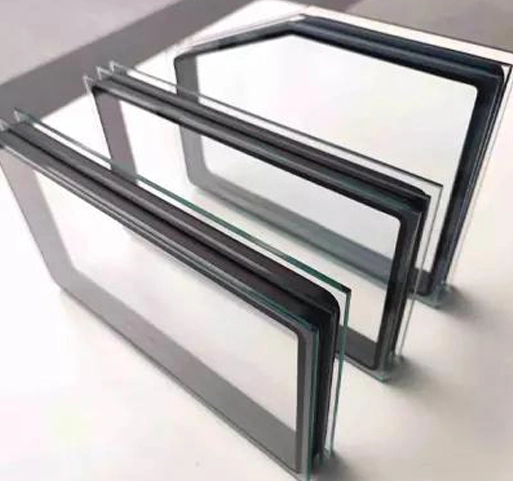
Evergreen states that many dichroic glass panels can be tempered depending on the substrate and coating specification. Dichroic panels can also be laminated for architectural and interior applications.
The appropriate construction should therefore be confirmed before fabrication, particularly for facades, overhead installations, partitions, and other applications with specific safety requirements.
No. The coating remains physically stable. The apparent color changes because different wavelengths are reflected or transmitted as lighting and viewing geometry change.
It can. Because the coating selectively reflects certain wavelengths while transmitting others, the reflected appearance and transmitted appearance can differ.
Artificial lighting can be used to create controlled effects with dichroic glass. The result depends on the spectrum, direction, intensity, and position of the light source, so testing the actual lighting setup is recommended for design-critical applications.
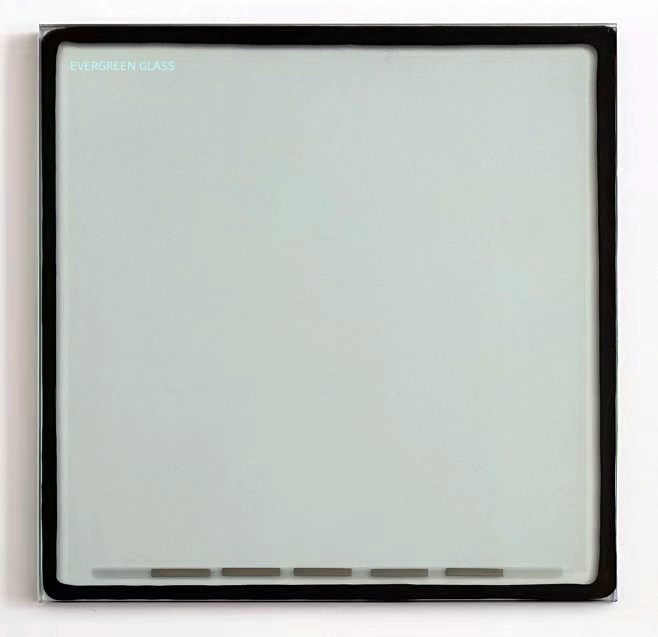
A photograph records the glass under one specific combination of lighting, camera angle, background, and exposure. Your installation may use different lighting and viewing conditions, producing a different visible color.
Yes. Evergreen lists architectural and interior uses including decorative facades, partitions, ceilings, displays, and glass wall applications. Appropriate fabrication and safety configurations should be selected for the specific project.
The most important characteristic of dichroic glass is not one particular color but its ability to respond visually to light and movement. Viewing angle changes which wavelengths reach the observer, while daylight, artificial lighting, background surfaces, and panel orientation determine how strongly reflected or transmitted colors are perceived.
For architects and interior designers, successful use therefore depends on testing the glass within the intended lighting and spatial environment and treating light, viewing direction, surrounding materials, and glazing configuration as part of one integrated design.