
Search
PVB laminated glass and SGP laminated glass are two common safety glass materials. They both have high transparency and good impact resistance, but there are significant differences in load-bearing capacity, durability, and safety. SGP laminated glass, with its superior performance, is gradually becoming the preferred choice for high-security demand scenarios.
PVB (Polyvinyl Butyral) is a transparent interlayer material with good transparency, sound insulation, cold resistance, and UV resistance. PVB laminated glass is mainly used in architectural glass, automotive glass, and transportation facilities. PVB glass can effectively prevent the scattering of fragments when the glass breaks, ensuring personnel safety.
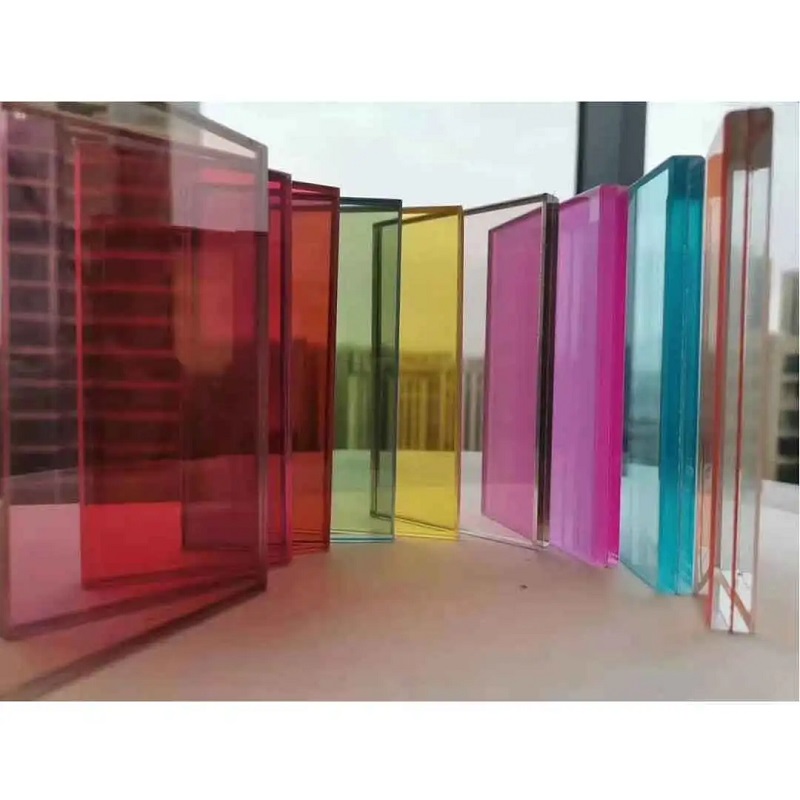
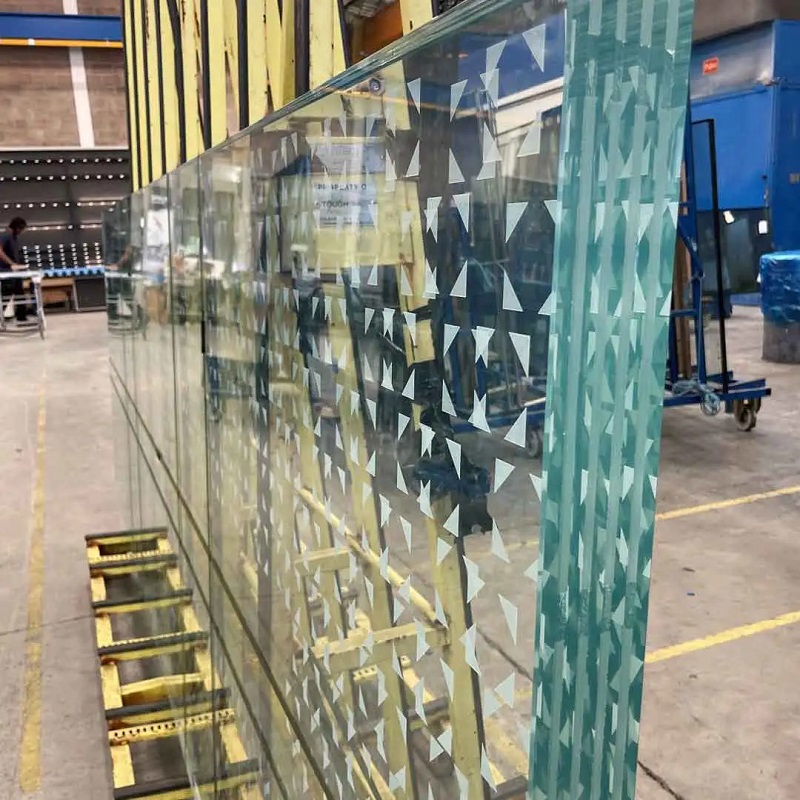
SGP (SentryGlas Plus) laminated glass uses an SGP interlayer, which far exceeds the performance of PVB laminated glass. SGP laminated glass not only has twice the load-bearing capacity of PVB laminated glass but also, under the same load and thickness, its bending deflection is only 1/4 of that of PVB laminated glass. It has stronger tear strength and impact resistance, and even if the glass breaks, it can maintain integrity, preventing fragment scattering.
| Comparison Criteria | SGP Interlayer | PVB Interlayer |
|---|---|---|
| Structural Strength | Very high stiffness; can contribute to load-bearing performance | Flexible; minimal structural contribution |
| Deflection Control | Low deflection; maintains glass rigidity under load | Higher deflection due to softer interlayer |
| Post-Breakage Behavior | Retains integrity with strong “frame-like” stability | Holds fragments but shows noticeable sagging |
| Durability & Weather Resistance | Excellent resistance to moisture, UV, and long-term aging | Good, but more sensitive to humidity and long-term degradation |
| Optical Stability | Very low yellowing; high long-term clarity | Possible slight yellowing depending on quality and exposure |
| Cost Level | Higher cost, premium structural applications | More economical, widely used standard solution |
SGP laminated glass far exceeds PVB laminated glass in load-bearing capacity and bending stiffness. Under the same thickness and load conditions, the bending deflection of SGP laminated glass is only 1/4 of that of PVB laminated glass, and its load-bearing capacity is twice that of PVB laminated glass. Therefore, SGP laminated glass performs better under high-strength and high-security demands, especially in high-rise buildings and transportation facilities where glass load-bearing requirements are high, giving SGP laminated glass a significant advantage.
SGP laminated glass has stronger tear strength, and even if the glass breaks, the SGP interlayer can still bond the fragments, maintaining the integrity of the glass and preventing fragment scattering, ensuring personnel safety. In addition, SGP laminated glass deforms less upon impact and can withstand certain loads without collapsing, making its safety far superior to PVB laminated glass, especially under extreme conditions such as bulletproof, explosion-proof, and typhoon resistance.
SGP laminated glass has extremely strong UV resistance, moisture resistance, and climate change resistance, and will not yellow or discolor after long-term use. In contrast, PVB laminated glass tends to yellow after long-term use, affecting transparency and aesthetics. Therefore, SGP laminated glass is more suitable for long-term exposure to sunlight and harsh environments.
When comparing PVB vs SGP, the key difference lies in structural performance versus flexibility. SGP (SentryGlas® ionoplast interlayer) is engineered for high-strength, load-bearing laminated glass systems, making it ideal for structural façades, balustrades, and oversized glazing where stiffness and safety retention are critical. In contrast, PVB (polyvinyl butyral) remains the industry standard for general architectural glazing due to its cost efficiency, strong optical performance, and reliable impact resistance in non-structural applications.
Choosing between SGP vs PVB depends on whether the project prioritizes structural rigidity and long-term durability (SGP) or economic efficiency and conventional performance (PVB).
Overall, SGP laminated glass shows significant advantages over PVB laminated glass in several aspects, particularly in load-bearing capacity, safety, and durability. It is currently the ideal choice for high-strength, high-security demanding locations on the market, especially suitable for high-rise buildings, special protection venues, and transparent structures that need to withstand greater pressure. If you need a superior performance safety glass material, EVERGREEN's SGP laminated glass is undoubtedly the most ideal choice.
SGP (SentryGlas®) is an ionoplast interlayer made from ethylene-based polymers with strong ionic bonding. It offers significantly higher stiffness, strength, and durability compared to traditional PVB, making it suitable for structural laminated glass applications.
PVB, SGP, and EVA are all interlayers used in laminated glass, but they differ in performance:
PVB: Standard architectural interlayer with good safety and optical clarity, widely used in windows and façades.
SGP: High-performance structural interlayer with superior strength, stiffness, and weather resistance.
EVA: Flexible and moisture-resistant, often used in decorative or specialty applications like interior panels and photovoltaics.
Neither is universally “better.” Laminated glass provides safety retention after breakage and better security, while tempered glass offers higher single-pane strength and breaks into small fragments for safety. Laminated glass is preferred for overhead, structural, or security applications.
Yes. SGP interlayers provide up to 100 times higher stiffness than PVB, resulting in better load distribution, reduced deflection, and improved structural performance in laminated glass systems.
PVB laminated glass is widely used in architectural glazing such as windows, curtain walls, skylights, and interior partitions where safety, acoustic performance, and cost efficiency are key priorities.