

Search
Located in northern North America, most regions of Canada have a cold and temperate continental climate, with long and severe winters (extreme low temperatures in some areas can reach -50℃) and short and hot summers. Building heating and cooling energy consumption accounts for more than 30% of the total social energy consumption, among which heat loss through door and window glass is the main weak link of building energy consumption—heat transfer loss through ordinary glass accounts for 40%-50% of the total heat loss of building envelopes. As a new generation of high-performance energy-saving glass, vacuum glass, relying on its core advantage of blocking heat transfer through the high-vacuum inner cavity, has shown significant energy-saving effects in applications in different climate regions of Canada. Compared with traditional monolithic glass and insulating glass, its energy-saving advantages can be intuitively reflected through a number of core thermal performance data. At the same time, it conforms to Canada's Energy Star certification standard and CSA A440.2 energy-saving specification, making it the preferred material for local building energy-saving renovation and new green buildings.

Canada has a vast territory with significant climate differences, which can be divided into three core climate regions. The core needs for building energy conservation in different regions vary, but all focus on "reducing heat transfer loss and lowering heating/cooling energy consumption": First, the northern frigid region (such as Yukon and Northwest Territories), with an average winter temperature of -20℃ to -35℃ and extreme low temperatures up to -50℃. Building energy consumption is dominated by heating, and the core need is to maximize the blocking of indoor heat leakage; second, the central temperate region (such as Ontario and Manitoba), with distinct four seasons, cold winters and hot summers, requiring both heating and cooling energy conservation; third, the western coastal region (such as British Columbia), with a mild and humid climate, relatively high winter temperatures but more rain and wind, and the key need is to reduce heat transfer and air leakage.
According to data from Natural Resources Canada, in typical Canadian residences, heat loss through traditional double-layer ordinary insulating glass accounts for more than 27% of the total winter heating energy consumption. By adopting high-performance energy-saving glass, building heating energy consumption can be reduced by 20%-40%, while reducing summer cooling load, which is in line with Canada's "dual carbon" goals and building energy-saving renovation policies—such as British Columbia's Clean BC program, which provides a rebate of up to 9,500 Canadian dollars for buildings using high-performance energy-saving glass, and clearly requires products to meet the Energy Star certification standard (core indicators: U-value ≤ 1.22 W/(㎡·K) or ER value ≥ 34).
The core indicators for measuring the energy-saving effect of glass include heat transfer coefficient (U-value, the lower the better the thermal insulation performance), solar heat gain coefficient (SHGC, balancing winter solar heat gain and summer shading needs), energy rating (ER value, a unique Canadian comprehensive indicator, the higher the better the energy-saving effect), and anti-condensation performance. Combined with actual application scenarios in Canada, the following is a precise data comparison between vacuum glass and monolithic glass, ordinary insulating glass (double-glass single-cavity, triple-glass double-cavity). All data comply with the test conditions of Canada's CSA A440.2 standard (indoor 25℃, outdoor -18℃, relative humidity 70%), and refer to industry measured data and authoritative reports to ensure accuracy and applicability.
(I) Comparison of Core Thermal Performance Data
The following table shows the comparison of core performance data of different types of glass under typical Canadian climate conditions, clearly presenting the energy-saving advantages of vacuum glass:
Glass Type | Heat Transfer Coefficient U-value (W/(㎡·K)) | Solar Heat Gain Coefficient (SHGC) | Energy Rating (ER Value) | Anti-Condensation Temperature (℃) |
Ordinary Monolithic Glass (5mm) | 5.8-6.2 | 0.85-0.90 | ≤20 | 10-12 |
Ordinary Double-Glass Single-Cavity Insulating Glass (5+12A+5mm) | 2.8-3.2 | 0.75-0.80 | 28-32 | 0-2 |
Triple-Glass Double-Cavity Insulating Glass (5+9A+5+9A+5mm) | 0.7-0.9 | 0.65-0.70 | 38-42 | -15 to -10 |
Low-E Vacuum Glass (5+0.3V+5mm) | 0.4-0.7 | 0.45-0.60 (adjustable on demand) | 45-50 | -40 to -35 |
Data Interpretation: The U-value of vacuum glass is as low as 0.4 W/(㎡·K), which is only 1/15 of that of ordinary monolithic glass and 1/7 of that of ordinary double-glass insulating glass, and even better than that of triple-glass double-cavity insulating glass (U-value 0.7-0.9 W/(㎡·K)). This means that its thermal insulation performance is 2-4 times that of insulating glass and 6-10 times that of monolithic glass, which can maximize the reduction of indoor and outdoor heat transfer, especially suitable for the heating energy-saving needs of Canada's frigid regions. At the same time, the ER value of vacuum glass can reach 45-50, far exceeding the minimum requirement of Energy Star certification (ER ≥ 34). Its anti-condensation temperature is as low as -40℃, and it will not condense in the extreme low-temperature environment in northern Canada (outdoor -50℃, indoor 25℃, relative humidity 70%), avoiding the problem that traditional glass condensation affects lighting and building aesthetics. This advantage is incomparable to insulating glass—even triple-glass double-cavity insulating glass may condense when the outdoor temperature is lower than -15℃.
(II) Energy Consumption Data Comparison in Different Climate Regions
Combined with the actual working conditions of Canada's three major climate regions, taking a 100-square-meter residence (window area 20 square meters, floor height 2.8 meters) as the standard, the annual heating, cooling energy consumption and costs of different types of glass are compared (heating is calculated by natural gas, unit price 0.15 Canadian dollars/cubic meter; cooling is calculated by electricity, unit price 0.18 Canadian dollars/kWh). The specific data are as follows:
Climate Region | Glass Type | Annual Heating Energy Consumption (cubic meters) | Annual Cooling Energy Consumption (kWh) | Total Annual Energy Consumption Cost (Canadian dollars) | Energy Saving Rate Compared with Ordinary Insulating Glass |
Northern Frigid Region (Yukon) | Ordinary Monolithic Glass | 2800 | 350 | 477 | -68.2% |
Ordinary Double-Glass Insulating Glass | 1660 | 320 | 290.4 | 0% | |
Triple-Glass Double-Cavity Insulating Glass | 880 | 300 | 177 | 39.1% | |
Low-E Vacuum Glass | 620 | 280 | 137.4 | 52.7% | |
Central Temperate Region (Ontario) | Ordinary Monolithic Glass | 1900 | 1200 | 519 | -58.9% |
Ordinary Double-Glass Insulating Glass | 1190 | 980 | 327 | 0% | |
Triple-Glass Double-Cavity Insulating Glass | 630 | 850 | 216.5 | 33.8% | |
Low-E Vacuum Glass | 440 | 780 | 172.2 | 47.4% | |
Western Coastal Region (British Columbia) | Ordinary Monolithic Glass | 1100 | 1500 | 495 | -50% |
Ordinary Double-Glass Insulating Glass | 730 | 1200 | 330 | 0% | |
Triple-Glass Double-Cavity Insulating Glass | 400 | 1050 | 225 | 31.8% | |
Low-E Vacuum Glass | 290 | 980 | 184.9 | 43.9% |
Data Interpretation: In Canada's northern frigid region with the highest energy consumption demand, the total annual energy consumption cost of vacuum glass is only 137.4 Canadian dollars, with an energy saving rate of 52.7% compared with ordinary double-glass insulating glass (290.4 Canadian dollars), saving 153 Canadian dollars in energy costs annually; even in the western coastal region with lower energy consumption demand, its energy saving rate is 43.9%, saving 145.1 Canadian dollars in energy costs annually. In addition, the SHGC value of vacuum glass can be adjusted on demand (0.45-0.60). In winter, it can assist heating through reasonable solar heat gain (moderate SHGC), reducing natural gas consumption; in summer, it can reduce the SHGC value to block solar radiant heat, reducing air conditioning use, achieving the dual energy-saving effect of "warm in winter and cool in summer"—measured data show that buildings using Low-E vacuum glass can reduce winter heating energy consumption by 30% and summer air conditioning energy consumption by 40%, which perfectly adapts to the climate characteristics of distinct four seasons in Canada's central temperate region.
(III) Comparison of Long-Term Energy-Saving Benefits
Combined with the service life of vacuum glass (design life of more than 25 years, far exceeding the 15-20 years of ordinary insulating glass), taking a 100-square-meter residence in Yukon, northern Canada as an example, the total energy consumption costs and energy-saving benefits of different types of glass over 25 years are compared (excluding the impact of energy price increases):
Ordinary double-glass insulating glass: Total 25-year energy consumption cost = 290.4 Canadian dollars/year × 25 years = 7,260 Canadian dollars;
Triple-glass double-cavity insulating glass: Total 25-year energy consumption cost = 177 Canadian dollars/year × 25 years = 4,425 Canadian dollars, 25-year energy-saving benefit = 7,260 - 4,425 = 2,835 Canadian dollars;
Low-E vacuum glass: Total 25-year energy consumption cost = 137.4 Canadian dollars/year × 25 years = 3,435 Canadian dollars, 25-year energy-saving benefit = 7,260 - 3,435 = 3,825 Canadian dollars.
In addition, vacuum glass has the characteristics of being thin, light and durable. An 8.3mm thick vacuum glass has a thermal insulation effect exceeding that of a 1.5m thick brick wall, and is 20% lighter than triple-glass double-cavity insulating glass. It can adapt to the window frame structure of traditional Canadian buildings without additional reinforcement, reducing building construction costs; at the same time, its high-vacuum inner cavity will not expand or contract due to altitude differences, and the U-value remains constant during horizontal and inclined installation, which is particularly suitable for the application of special building parts such as sunrooms and skylights in Canada, further expanding the energy-saving application scenarios, which is also an advantage that traditional insulating glass cannot achieve.
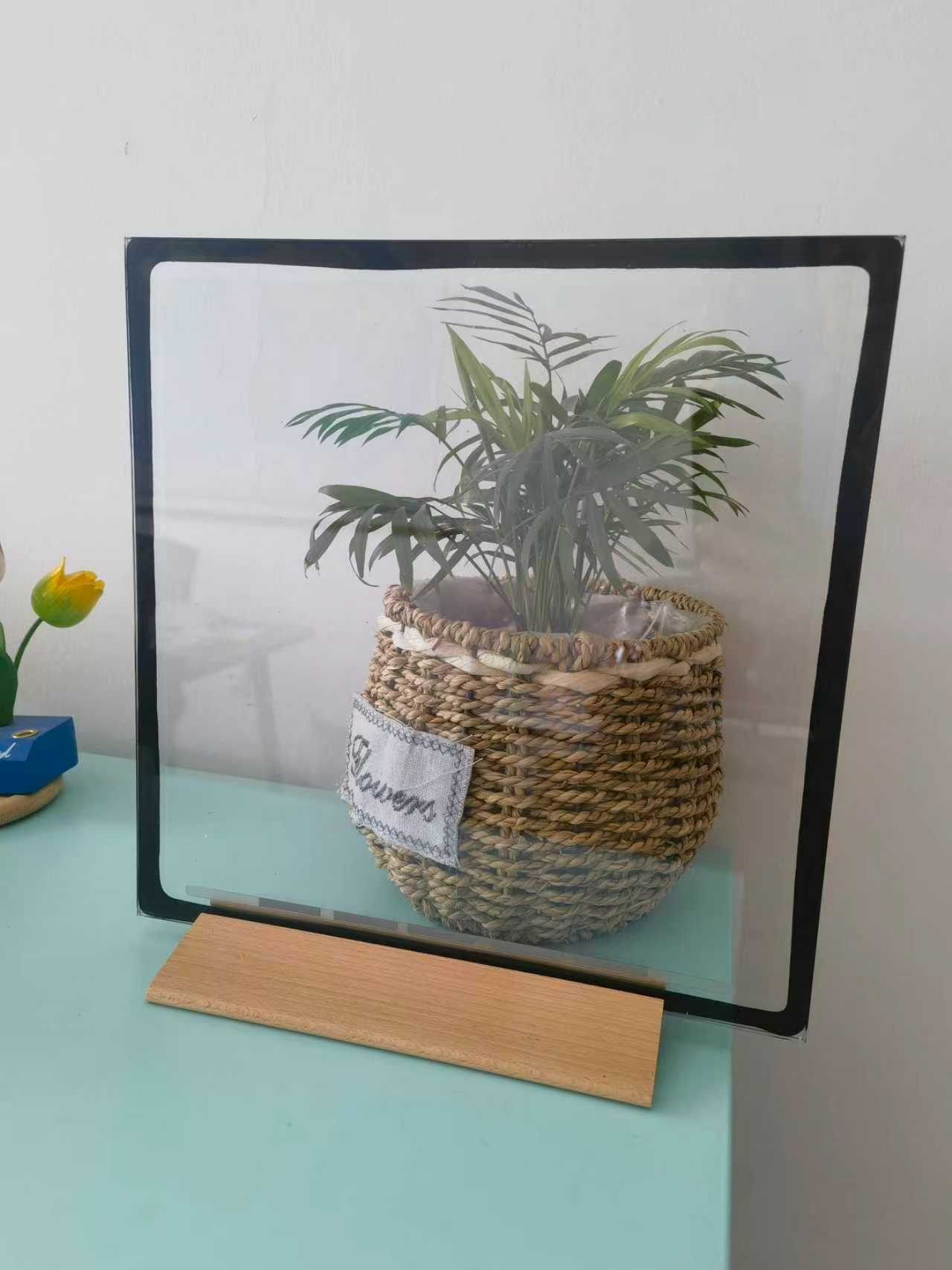
In addition to the significant advantages at the data level, vacuum glass has also shown unique value in adapting to local climate and building standards in practical applications in Canada, and its energy-saving effect has been verified through multiple actual projects. For example, after adopting Low-E vacuum glass in a Canadian energy-saving building project, the winter heating energy consumption was reduced by 30%, which fully met the Energy Star "Most Efficient" classification standard and obtained the highest provincial government subsidy; in the HERA project in Edmonton, vacuum glass replaced traditional insulating glass for residential renovation, which not only increased the building's ER value to 48, but also solved the pain point of glass condensation in local winters. Residents reported that the indoor temperature increased by 2-3℃, and the monthly heating cost decreased by 15-20 Canadian dollars.
In terms of policy adaptability, the core performance of vacuum glass fully meets the requirements of Canada's CSA A440.2 standard for the thermal performance of building glass. Its U-value (0.4-0.7 W/(㎡·K)) is far lower than the maximum limit of Energy Star certification (1.22 W/(㎡·K)), which can easily obtain government energy-saving subsidies and reduce the initial investment cost of building owners. At the same time, the energy-saving characteristics of vacuum glass help Canada achieve the goal of reducing building energy consumption intensity and reducing carbon emissions—it is estimated that each square meter of vacuum glass can reduce carbon emissions by about 120kg per year. If all new buildings in Canada adopt vacuum glass, carbon emissions can be reduced by more than 1 million tons per year, providing important support for the realization of the "dual carbon" goal, which is highly consistent with Canada's policy orientation of promoting green building development.
Combined with Canada's climate characteristics and building energy-saving needs, through multi-dimensional comparison of core performance data, regional energy consumption data and long-term energy-saving benefits, it can be clearly concluded that the energy-saving effect of vacuum glass in Canada is far superior to that of ordinary monolithic glass and traditional insulating glass. Its U-value is as low as 0.4 W/(㎡·K), ER value is 45-50, and the energy saving rate can reach 52.7% in the northern frigid region, 47.4% in the central temperate region and 43.9% in the western coastal region. It can not only significantly reduce building heating and cooling energy consumption and reduce long-term energy expenditure of owners, but also solve the pain points such as local winter glass condensation and performance instability caused by altitude differences, adapting to the building application scenarios of various climate regions in Canada.
Compared with triple-glass double-cavity insulating glass, although the initial purchase cost of vacuum glass is slightly higher, relying on its longer service life, better energy-saving effect and policy adaptability, its investment payback period can be shortened to 4-6 years (in northern frigid regions), with significant long-term energy-saving benefits. With the continuous advancement of Canada's green building policies and the improvement of the Energy Star certification system, vacuum glass, with its quantifiable energy-saving advantages, will gradually replace traditional glass and become the core material for building energy-saving renovation and new projects in Canada, providing important support for local energy conservation, consumption reduction and carbon emission reduction goals, and promoting the building industry to develop in an efficient, green and sustainable direction.